FAQ
Questions about rubber stone?
How long does RubberStone last?
Rubber Stone is designed to deliver 20+ years of performance without the cracking, surface breakdown, or constant repairs common with concrete. The premium EPDM rubber maintains its flexibility, structure, and colour vibrancy, even through Saskatchewan’s extreme temperature swings. This long-term durability is why J&B confidently backs Rubber Stone with a 5-year warranty against cracking and delamination.
What does the 5-year Rubber Stone warranty cover?
J&B Rubber Stone Paving provides a 5-year warranty against cracking and delamination. The warranty does not cover shifting or settling of the underlying surface, damage that occurs after installation is complete (including damage caused by people, animals, or unexpected events), or routine maintenance such as re-coats. The warranty is non-transferable and applies only to the original installation. To remain valid, proper maintenance must be followed using approved Rubber Stone products only.
Do you offer warranties on Polyaspartic and Vipeq installations as well?
Yes. We stand behind every system we install.
Our polyaspartic floor coatings include a 10-year warranty against peeling, delamination, and coating failure, providing long-term durability for garages, basements, and commercial floors.
Our Vipeq cork wall systems are backed by a 15-year warranty against cracking, delamination, and material degradation, ensuring lasting performance for both interior and exterior wall applications.
Warranty terms vary depending on the product and installation conditions, and our team will review the specific coverage details with you before installation begins.
How does Rubber Stone compare to replacing concrete?
Concrete replacement is expensive, disruptive, and still prone to cracking. Rubber Stone installs over your existing concrete for roughly half the cost, with no demolition, no disposal fees, no heavy machinery tearing up your landscaping. Most projects complete in a single day instead of weeks, and the surface flexes through freeze-thaw cycles instead of cracking.
What surfaces can Rubber Stone be applied to?
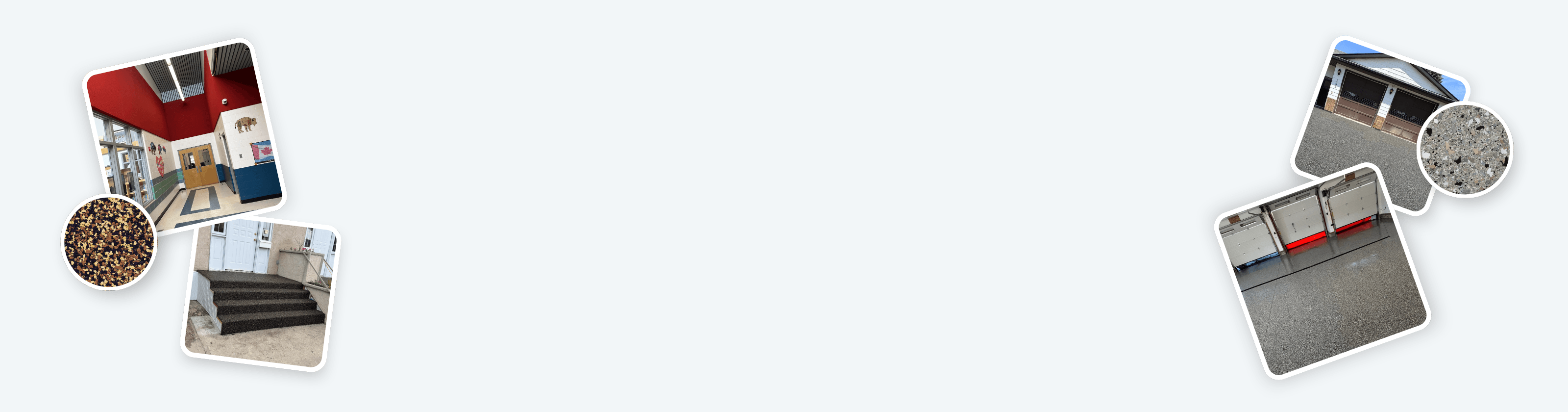
Rubber Stone works well on driveways, walkways, patios, pool decks, stairs, suspended decks, courtyards, and many residential or commercial outdoor surfaces. We install directly over existing concrete, asphalt, or stone. It's designed primarily for outdoor use where it performs best, with some specialized indoor applications when appropriate.
What if my concrete is already cracked or uneven?
Minor cracks in concrete are very common and usually not an issue. Rubber Stone is a flexible resurfacing system, meaning it moves with the existing surface instead of fighting against it like rigid concrete does. This flexibility allows the finished surface to remain intact even when the underlying concrete has minor cracks, expands, and contracts. If a surface is severely compromised or structurally unsound, repairs may be needed first — and our team will walk you through the best option for your specific space.
How does Rubber Stone perform in winter?
Rubber Stone is designed specifically for Saskatchewan's freeze-thaw conditions. It flexes with surface movement instead of cracking, provides slip-resistant traction when wet, and doesn't trap ice in cracks like deteriorating concrete. Snow melts faster as rubber warms quickly in sunlight, reducing winter damage and eliminating those constant spring repairs.
Can you add borders, patterns, or designs to Rubber Stone?
Yes. Rubber Stone can be customized with borders, colour blends, and design details. We’ve hand-traced and installed logos (like our Dairy Queen project), created bevel finishes, and added clean edge details. Customers often choose subtle accents to match their home or bold designs that make a statement.
How long does Rubber Stone installation take?
Most Rubber Stone projects are completed in one day. This means far less disruption compared to concrete replacement, with no extended construction timelines.
How do I maintain Rubber Stone?
Maintenance is simple. Occasional pressure washing keeps it looking clean, and a top-coat refresh every 5-7 years maintains appearance (some surfaces last 10+ years before needing it). There's no sealing or constant patching like concrete.
What’s the difference between Rubber Stone, Polyaspartic, and Vipeq?
Rubber Stone is our flexible, slip-resistant solution for outdoor horizontal surfaces like driveways, walkways, patios, and pool decks.
Polyaspartic is a smooth, durable coating for garages, basements, utility rooms, and high-traffic interior floors.
Vipeq is our fire-resistant wall solution for interior and exterior surfaces that improves durability, sound control, and finished appearance.
If you’re not sure which is best for your project, the J&B team would be happy to help you choose the right solution based on how the space is used and what performance you need.
What colours are available?
With the Rubber Stone product, we offer 21 fade-resistant colours that can be mixed to create custom blends to suit your property’s style. There’s also an eco-friendly black rubber option made from 100% recycled tires for a more economical and sustainable choice.
Our polyaspartic floor coatings are available in an endless range of decorative flake blends and solid colour options, allowing you to achieve everything from a subtle, modern finish to a bold, high-contrast garage or basement floor.
For walls, Vipeq cork coatings come in a wide selection of natural, textured colours designed to complement exterior and interior surfaces while maintaining a clean, modern look.
When can I walk/drive on it after installation?
Cure time depends on the system installed, but all of our surfaces are designed to minimize disruption and get you back to using your space quickly.
For Rubber Stone paving, most installations can be walked on it the same day once it's cured. For vehicles, we recommend waiting 24-48 hours depending on application thickness and temperature—sometimes an extra day for thicker applications.
Our polyaspartic floor coatings cure much faster, and in many cases can be walked on within a few hours, with vehicles returning to the surface as soon as the next day.
For Vipeq cork wall systems, the surface sets quickly and is typically ready for normal use within 24 hours once fully cured.
Before we leave the job site, we'll give you clear, site-specific instructions so you know exactly when your surface is ready to use.
Plan your next project
Tell us what you’re dealing with and we’ll help you determine the best next step.